by William Britten | Essence, Maurice Nicoll, Self-Observation |
Finding a center of gravity within: how to know your True Self, or Essence. “The center of gravity is the seat of unity.” Jeanne de Salzmann, The Reality of Being, p130 “By the force of my attention actively turned inward, the movement of energy changes. Instead...

by William Britten | Self-Observation, Gospel of Thomas, Maurice Nicoll, Self-Remembering |
Life, coming in as impressions, must be transformed. This state of consciousness leads to thinking and understanding in a new way. “In this system of teaching, man is regarded as a three-story factory, taking in three foods—ordinary food on the lower floor of the...
by William Britten | Cynthia Bourgeault, Quotes, Reciprocal Feeding |
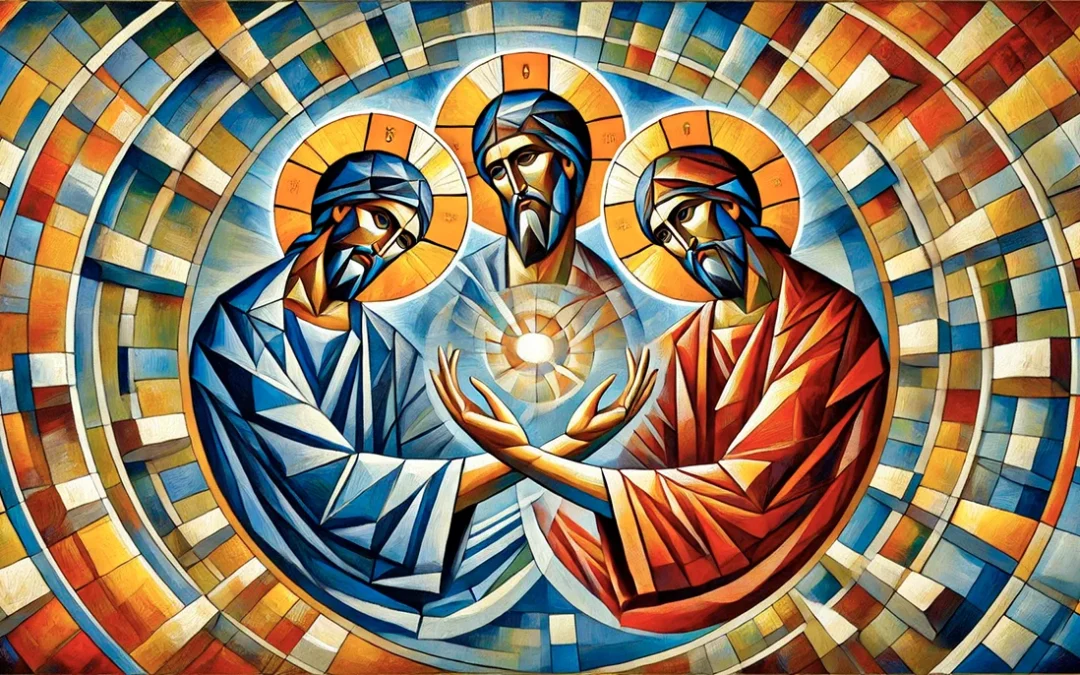
The Divine Exchange, represented by the icon of perichoresis, the essence of the Trinity. The Heart of Jesus’ Vision “The heart of what Jesus was about, his vision, his way of being in the world, has something to do with exchange.” Cynthia...
by William Britten | Reciprocal Feeding, Beatitudes, Cynthia Bourgeault, Gospel of Mary Magdalene, Gospel of Thomas, Maurice Nicoll |
Blessed are merciful, who shall receive mercy—mercy and exchange. “Our role, as most of the great teachings have talked about, is to perceive the divine mercy, the divine qualities, as they wish to come into form and enact them—things like generosity, peace, truth,...
by William Britten | Kingdom of Heaven, Gospel of Thomas, Maurice Nicoll |
The level above Man is called the Kingdom of Heaven or Kingdom of God in the Gospels. It has many other names in different writings. In the Gospels, it is said that the Kingdom of Heaven is within. Jesus’s Central Teaching “Jesus said, I have come that you...