
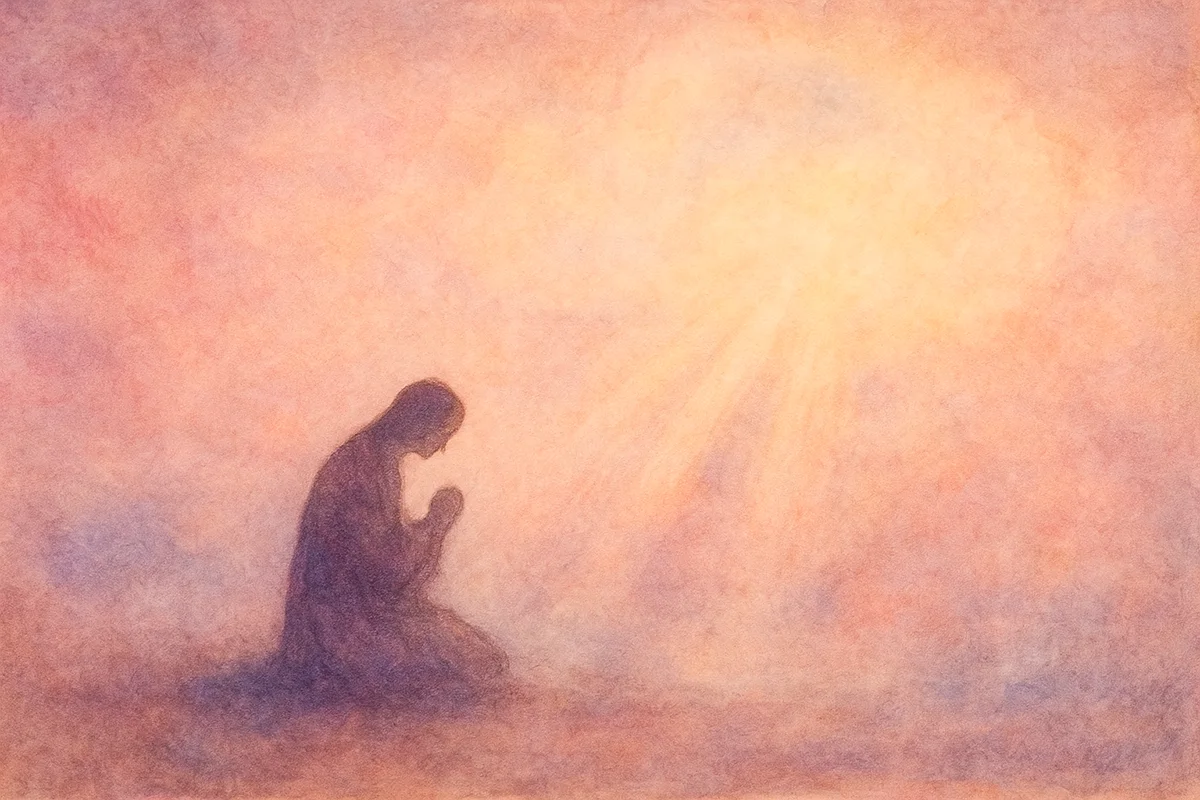
“Apophatic practice really corresponds to a different, much more unboundaried self.” Cynthia Bourgeault
Beyond the Faculties
“One of the basic lines of division when you’re talking about spiritual theology are apophatic and cataphatic. And cataphatic practices and forms are forms of prayer and worship and understanding that make use of our faculties. So our faculties are, according to Thomas Aquinas, in a long tradition, our reason, our emotions, our will, our memory, those are the biggies. So if a practice is making use of those things, is cultivating them, is developing them, then it’s a cataphatic practice. Apophatic practice does not make use of those faculties. Depending on how you look at it, it bypasses them, end runs them, or transcends them. And the reason for this, basically, is cataphatic practice basically goes back and reinforces our usual normal sense of small self, our narrative self.
“Apophatic practice really corresponds to a different, much more unboundaried self. It begins at the threshold of what the traditions would call witnessing presence. So it’s no longer trying to find identity by our narration of who I am and what my history was. And it doesn’t make use of the faculties that keep pulling us back to the smaller self. So I would say that certainly when we talk about contemplation in the Christian West and the Christian East, we’re talking about the apophatic domain. And that means that we’re quite right that contemplation won’t begin until you’ve learned to break your exclusive and even obsessive reliance on the faculties and the sense of self that’s generated by them.” Cynthia Bourgeault, The Heart of Centering Prayer 2016, 2:12 Part 3 of 4.
Growing an Apophatic Selfhood
“The journey has basically been conceived of as a lifetime of inner refinement and preparation and preparing, which is integral, that as you spend more and more time hanging out in those apophatic practices, you also begin to grow an apophatic selfhood, which looks nothing like your personal history in time. They’re not unrelated, but they’re related like the sliver of the crescent of the moon and the full of the moon, if you want.” Cynthia Bourgeault, The Heart of Centering Prayer 2016, 8:23 Part 3 of 4
In the Midst of Nothingness
“Merton has another quote that says, in the midst of our own nothingness, we find the infinitely real. This is exactly what we’re talking about, and it’s why all the apophatic vocabulary in Christian mysticism, from The Cloud of Unknowing to Eckhart, to Boehme, is always around this, the nothing, the nothing. And the self will is a something with an energy and a desire and an identity and a force field, and it repels love or it manipulates it.” Cynthia Bourgeault, Boehme for Beginners, 4:31 disc5 track5.
The Work of Contemplation
“At the non-dual level, the playing field reconfigures out of a participational oneness that basically functions in terms of no separation. Because the perceptual field is undivided. And a lot of people are talking about this nowadays. What makes it interesting to me is that the Cloud of Unknowing was talking about this in the 14th century. And the place where [the author] specifically anchors and roots the work of contemplation, as he calls it, is at the junction point between classic cataphatic consciousness and cataphatic selfhood and the movement into this other, which we would now call apophatic or non-dual perception. That’s where he puts it. And he sees contemplation not as some specific state of grace that comes to you, but he sees it as a work which you engage at a certain stage in your readiness, in your preparation, with the advice of a spiritual guide, but the specific work of reframing, rewiring, if you want to call it that, the channels of perception.” Cynthia Bourgeault, The Heart of Centering Prayer 2016, 18:52 Part 3 of 4.
Return as Cosmic Servants
“I believe that what happens really is that it is from that taste of the apophatic, non-dual, unboundaried selfhood that we finally acquire the freedom, the confidence, the abundance, and the intimacy to enter back into our own finite skins as cosmic servants.” Cynthia Bourgeault, The Heart of Centering Prayer 2016, 47:36 Part 3 of 4.
The Ever Endless Apophatic
“My sense is that if we interpret the Trinity not as a static portrait of God, but as a principle that … shows how this divine will to manifestation and tension with that ever endless apophatic continues to weave new forms, new revelations of what Boehme called the modernum mysterium, the wonders and mysteries that are within the abyss of ineffability. To bring them forth in new combinations, to show what God is like in the way so beautifully intuited in that Islamic hadith, the extra-Quranic saying, ‘God speaks and says, I was a hidden treasure, and so I love to be known’.” Cynthia Bourgeault, Holy Trinity and the Law of Three, 5:37 disc9 track13 New Arising From The Trinity
Logion 67
Yeshua says…
If you come to know all,
and yet you yourself are lacking,
you have missed everything.
Logion 50
Yeshua says…
Suppose you are asked,
“Where have you come from?”
say, “We have come from the Light at its source,
from the place where it came forth
and was manifest as Image and Icon.
If you are asked, “Are you that Light?”
say, “We are its children,
and chosen by the Source, the Living Father.”
If you are questioned,
“But what is the sign of the Source within you?”
say, “It is movement and it is rest.”
Quotations from the Gospel of Thomas are from Lynn C Bauman, Ward J Bauman, Cynthia Bourgeault, The Luminous Gospels (Praxis 2008)
Read the Impression introducing the Gospel of Thomas.



0 Comments